Meet Speechling Soundcheck
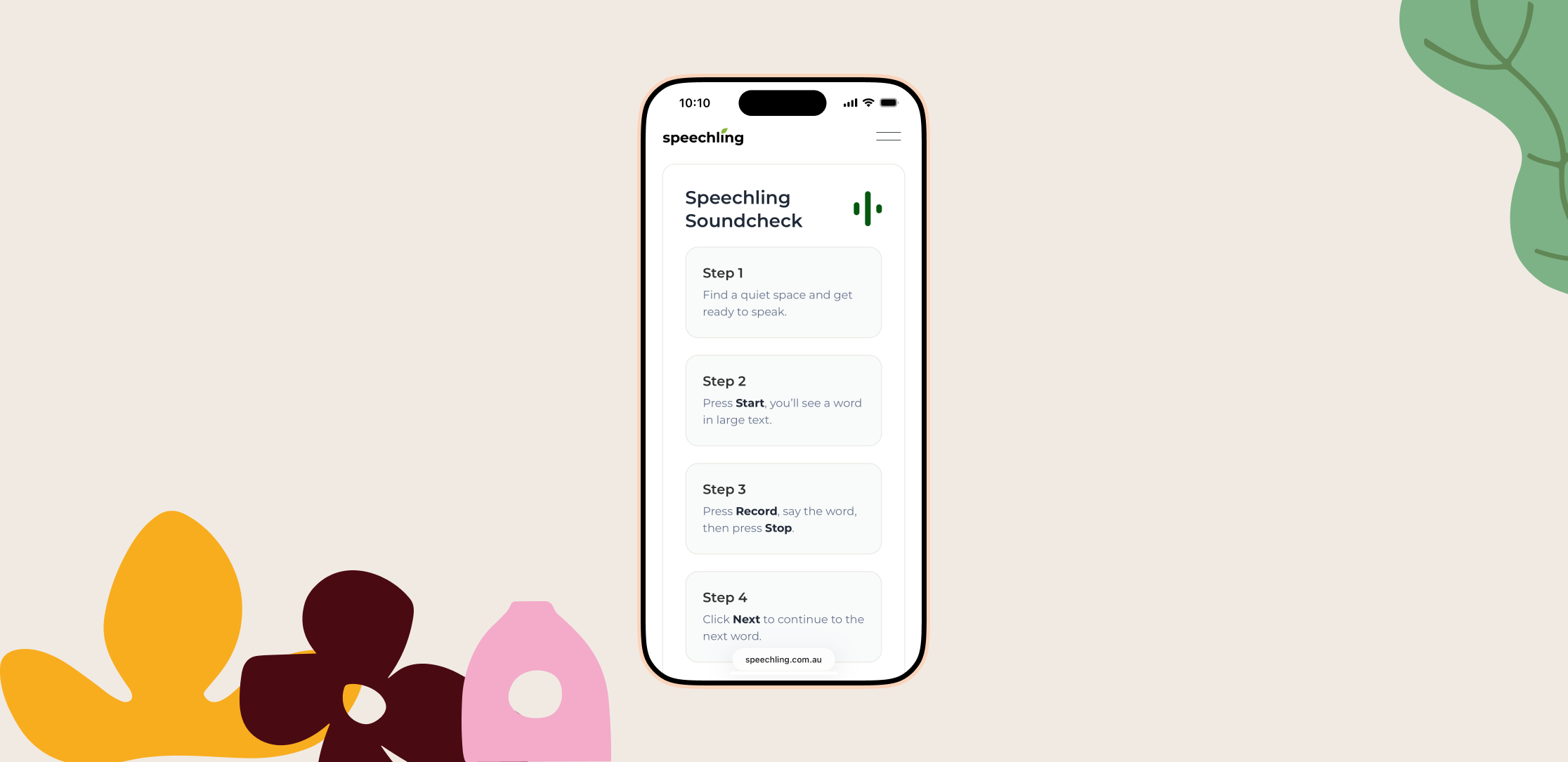
If you’re a parent, teacher, or carer, it’s completely normal to wonder: “Is this sound pattern just a phase… or should I look into it?”
Speechling Soundcheck was built for exactly that moment — a quick way to screen for common speech-sound patterns and get instant results.
What is Speechling Soundcheck?
Speechling Soundcheck is an AI-powered speech-sound error screener. It’s designed to be quick and easy to use, and it returns results straight away to help you identify potential speech patterns.
It’s also a first version — and Speechling has explicitly stated they’ll keep improving it over time using new data and user feedback.
Who is it for?
Soundcheck is a free tool aimed at parents, teachers, and carers who want a simple starting point when they notice a child may be hard to understand, or when certain sounds “keep showing up” in their speech.
How long does it take?
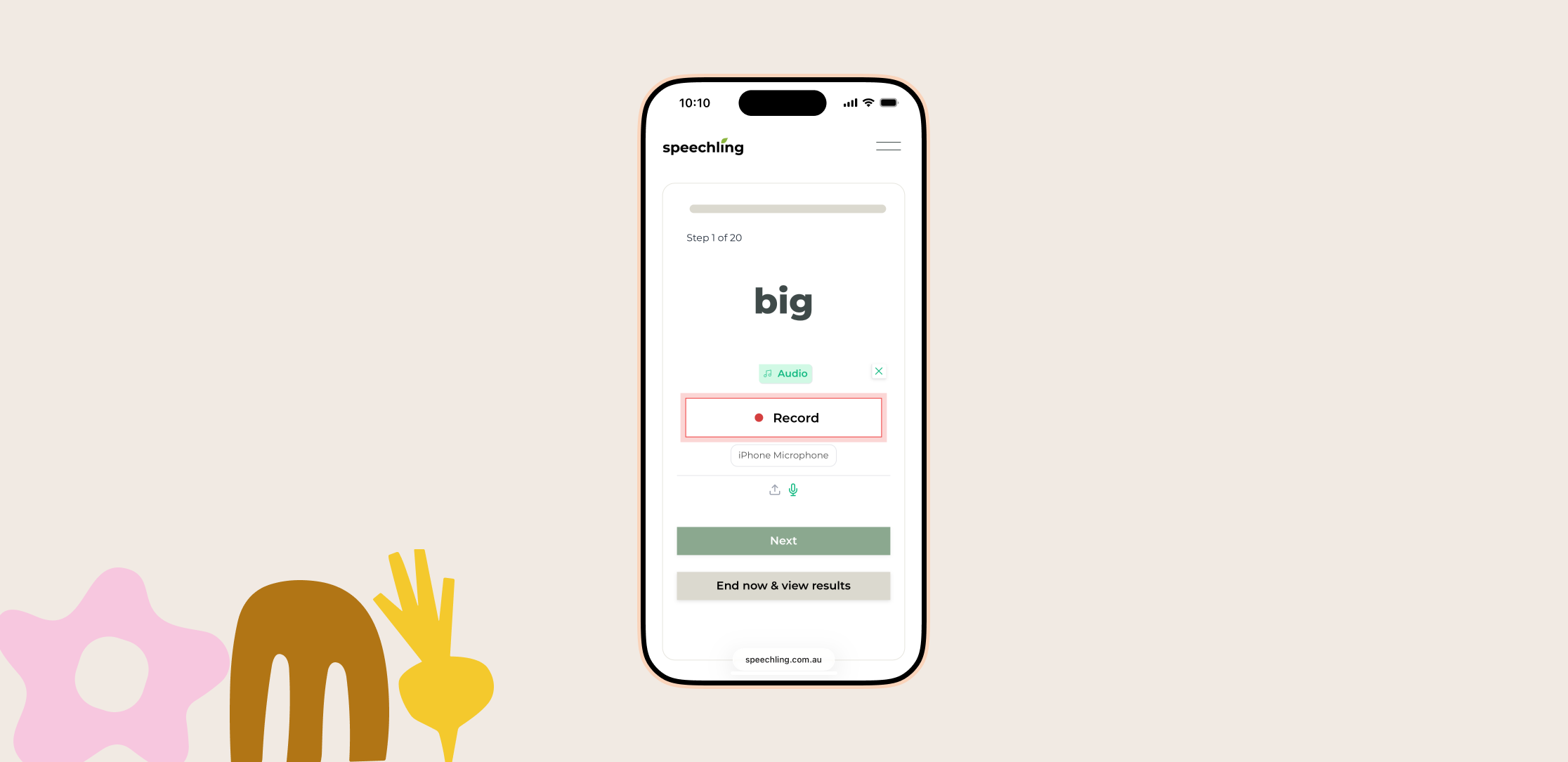
Soundcheck is designed to take around 4–5 minutes — short enough to do between dinner and bath time, or during a quiet moment in the classroom.
What does it screen for?
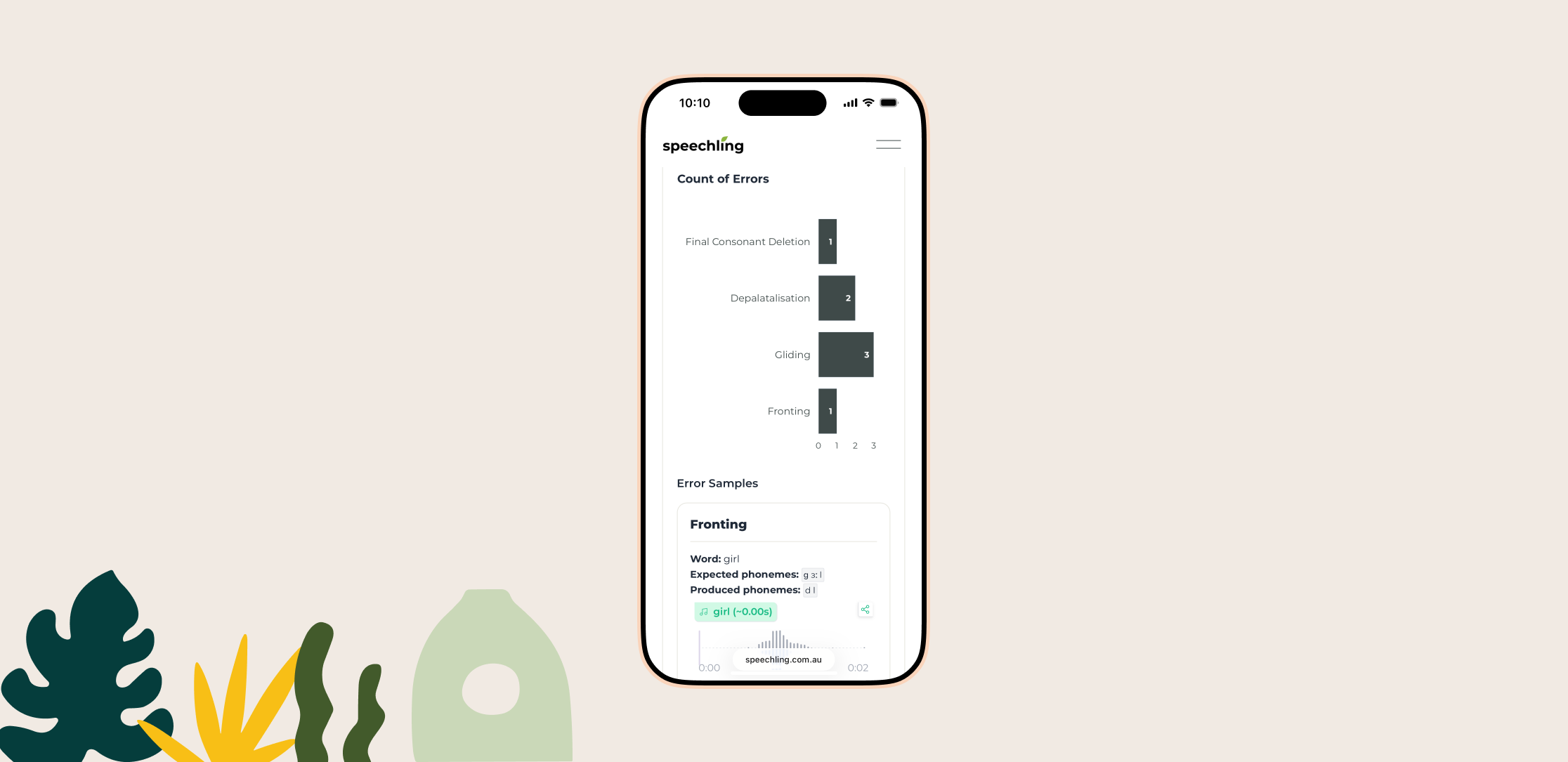
Soundcheck screens for four common phonological processes in children’s speech: Fronting, Gliding, Depalatalisation, and Final Consonant Deletion.
If those names sound technical — don’t worry. Here’s what they mean in everyday terms:
Fronting: When sounds usually made at the back of the mouth move forward. For example, a child might replace a “back” sound with a “front” sound (e.g., saying something closer to “tar” instead of “car”).
Gliding: when “r” or “l” sounds become a “w” or “y” sound (e.g., “wabbit” for “rabbit”). This is one of the more common patterns people notice early.
Depalatalisation: When a sound made with the tongue near the hard palate is replaced with a simpler sound (for example, a child may use a “plain” s-like sound instead of a “sh”-type sound).
Final Consonant Deletion: When the last consonant in a word is left off (for example, “ca” instead of “cat”). This can make speech sound “shortened” and can reduce clarity in connected speech.
Soundcheck is designed to flag these patterns so you can decide what to do next.
What “instant results” are (and aren’t)
The point of Soundcheck is to provide a screening snapshot — not a formal diagnosis. A screener can be incredibly helpful because it:
gives you language to describe what you’re hearing (e.g., “final consonants are dropping off”)
helps you decide whether it’s worth monitoring versus seeking support
creates a structured starting point for a conversation with a speech pathologist
But it’s still important to interpret any screener result in context: a child’s age, speech development, hearing history, multilingual background, attention/behaviour during the task, and how well unfamiliar listeners understand them all matter.
When should you consider speech pathology support?
Soundcheck is most useful as a “next step” if you’re thinking things like:
“Family understands them, but others don’t.”
“They get frustrated when speaking.”
“Their speech sounds younger than peers.”
“The same patterns have been there for a long time.”
“Teachers are noticing it impacts participation or literacy.”
If Soundcheck flags a pattern and you’re unsure what it means, that’s often a good time to book a speech pathology assessment — not because something is definitely wrong, but because clarity is empowering.
Why we built it (and what’s next)
Speechling Soundcheck exists to make speech-sound screening more accessible — fast, simple, and usable by the people who are with children every day. Speechling also notes that this is the app’s first version, and they’re committed to improving it based on new data and user feedback.
Ready to try it?
If you’re curious, you can access the Soundcheck app directly on Speechling’s website. It’s free, takes only a few minutes, and provides instant results.
Disclaimer
Speechling Soundcheck is an AI-powered screener and is not a substitute for a formal diagnosis. The model may make errors. Please consult a certified speech pathologist or care provider to discuss these results. For your privacy, no voice recordings or personal data are stored after your session ends. This screener uses words adapted from The Quick Screener (Bowen, 1996). Phoneme detection is powered by the vitouphy/wav2vec2-xls-r-300m-timit-phoneme model.